
Do we pay greater attention to the psychic lives of others in order to validate the idea that our own “otherness” is our own property? Or do we paradoxically invalidate our identities by being drawn to the ever-present public voices of the mental ill?
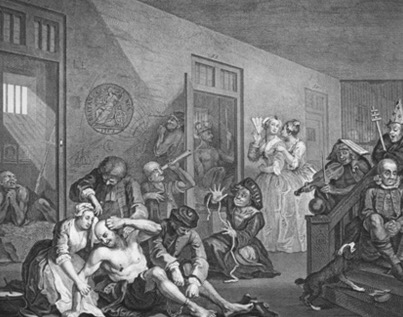
Of late I have become more and more concerned about where those in mental distress, or indeed those with diagnoses, are situated in the public domain. There is a common misconception that by tackling ‘difficult subject’ it allows the wider consumers of public information to challenge their preconceptions and force them to reassess their embedded ideas about ‘the mad’, ‘the other’ or who might be threatening to their security. It would be easy to congratulate the media for choosing to tackle these issues, but my suspicion is that, rather than supporting those who need to give voice to their lived experience, they are actually undermining it. How is this any different from the asylum public galleries at Moorfields and Bethlem hospitals in the 18th century: at Moorfields, galleries designed to open up the spaces for inpatients to leave their rooms were also open to the public to gawp at their “otherness’, no doubt basking in the assumption of their own sanity and normality. The patients were the subject of wonder, fear and pity. I wonder how far we have really come in this regard. Isn’t the media just another public gallery?
I ask myself, too, whether I have bought into this narrative about my illness. Do I want public understanding of mental illness to be so stark because its attempts are apparently noble? The answer to this question is complex. Yes, I do want the public domain to accommodate these voices. Yes, I do want this to challenge stigma and misunderstandings. Yes, I do want to see something about myself externalised in order to feel less isolated by my own condition. I worry about who owns this narrative however. Once you give something over to the public, they become the consumer – it is therefore a buyers market. Goods are only as lucrative as their appeal. What happens when identities become public property: when we let public ownership dictate the discourse?
Whom do we own? Television programmes have ownership of their characters and dictate where their stories travel. They have to power to control how we view them and how we respond to the narrative. If the audience does not respond to the person and their storyline, the channel or corporation can discard it or terminate the programme altogether. To make us want to consume more, they resort to greater and more manipulative tactics to keep us intrigued. We become addicted to drama. And they continually feed our addiction. We simply do not want to see the gradual, often insidious, development of mental distress: a torment that takes many forms and is largely a hidden disability. Something that is invisible is not interesting. This also undermines other forms of distress, transient and reactive forms of illness. Consumers cannot gain purchase on subtle and subterranean forms of torment. But they can dictate the market. They want continual access to the “otherness” of mental illness, as long as it feeds into their need for spectacle and intrigue. The media trades on discomfort and misfortune and we will always want to have some ownership of these forms of public malcontent.
We can name quite easily illnesses that affect the mind, but only through the prism of what the media allows us to see. The public can claim a complex understanding of bipolar disorder because they watch Homeland or EastEnders. They can tell themselves that they really know what schizophrenia is like because they have seen A Beautiful Mind. They may even have read the poems of Sylvia Plath, Ann Sexton and Robert Lowell, or marvelled at the dramatic and intricate ballads of the Romantic poets, or struck by the stark honesty of Susanna Kaysen or William Styron. Anyone can fill their shelves with books, autobiographies and DVDs, and record a programme on TiVo. All of this is free access. What is not, and should not be free access, is distress. In Annie Hall (1977), Alvy Singer remarks: “Oh, Sylvia Plath, interesting poetess, whose tragic suicide was misinterpreted as romantic by the schoolgirl mentality.” I wonder whether we have got any further in our interpretation of public figures as poster children for suicide or mental ill health. What is glib, may also be true.
This, in essence, comes down to positionality: the fluidity by which we position ourselves in reference to illness changes according to the whims and tastes of the media. Sometimes, the media recognises a cause and wants to tackle it head-on – this is incredibly important, but also incredibly opportunistic. It also implies and reinforces a hierarchy of behaviours and medical needs (a bastardisation of Maslow’s hierarchy). We can position ourselves in reference to the perceived needs of the character being represented and we can position ourselves in opposition to the intention of the representation. Those of us with a diagnosis can choose to embrace or reject the representation. This, of course, can hinder our own well being – it could be indicative of a rejection of the particulars of our own illness, especially if we have some ambivalence or poor awareness of its impact and implications. It can be motivational or corrupting. It can be inspirational or reinforcing of stigma (cultural and self-stigma). We are being told how to consume, but we are also being left to founder under the weight of our positionality. We are at the whim of the buyers’ market precisely because we believe that we can control the supply and demand; or that we really understand this paradigm.
Campaign groups that are consulted when the media chooses to tackle an illness or a subject matter do play a valuable role in preserving authenticity. Their ultimate goal is to continue to raise awareness and confront stigma, but they too are part of the ‘identity marketplace’. It is impossible to raise awareness when interest and engagement is so transitory. They are approached to bring sincerity to the portrayal of mental illness, but only the illness that the media feels is either current or interesting. I worry that, for example, EastEnders’ depiction of the trauma of postpartum psychosis will be all but forgotten in a few months’ time. Despite the involvement of Mind in developing the storyline and bringing out the pertinent and true details of the experience, only those who have a tendency to fully internalise the issues will be affected long-term by the storyline. I wonder how many viewers will focus solely on the concept of a ‘section’ than the lived experience of postpartum psychosis. A ‘section’ is often seen as something dramatic and scary, something for the truly mad (perhaps the truly dangerous too). It may further entrench the idea that all those with a mental illness are sick enough to be held involuntarily. The outpatients and the walking wounded are simply not interesting enough. How sick do we have to be? How sick should we present? Is my diagnosis trendy enough? When is my illness going to fall out of favour? For us it is a question of support, treatment and understanding, but this cannot be maintained if we do not represent consistent cultural and political currency.
I wonder what my value will be in the future…


 Gulliver Unravelled